
Isaac Malachi Peters: The Gist About Me
By StoriesFromNigeria ·
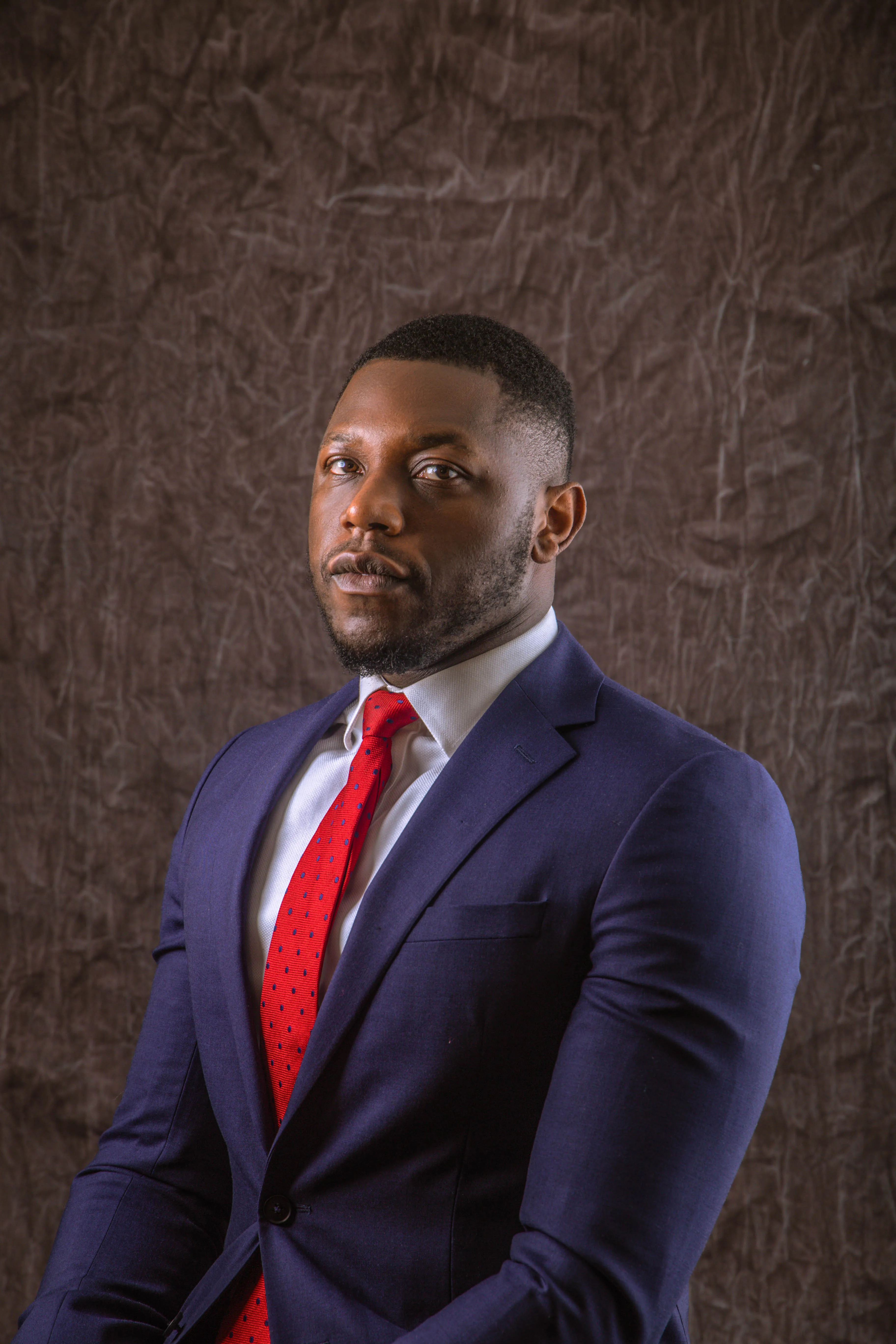
I was tapping my card at the train barriers on my way to see my sisters, when the guy working the gate stopped me.
“Bro, do you make content?”
I said yeah.
“Bro, love, man. Like, the videos you make. You shifted my perspective.”
That’s not a one-off.
It happens nearly every other time I go outside.
I was on a train once and saw a black guy asleep, the kind of sleep where you know he’s about to miss his stop and end up somewhere he never meant to be. I’ve been that guy before. I hate it.
So I woke him, told him where to get off. He looked up, dazed, and went, “Bro, like, I follow you on TikTok. That’s so mad.” We had a great conversation the rest of the ride.
Another time I was crossing the road and a woman stopped me, a bit shaken, telling me about her relationship, how rough things had gotten with her partner, things she was doing that she didn’t even realise were hurting him. She’d heard me talk about my marriage online, and it had given her a way to think about her own.
Here’s the thing about content like mine.
You post it, you see a number, this one got a thousand views, this one got a million, and you have no idea who’s actually on the other side of that number. You don’t know that it’s a guy at a train barrier, or a woman crossing a road, or a stranger asleep on the Northern Line. You’re just talking into a phone. But then you’re walking outside and it turns out thousands of people have heard you, been shaped by you a little, and you didn’t know their names until that moment.
That’s why I do it.
Not for clout, not for fame, not for money. Literally just to give people what I didn’t have, and what I’ve built for myself. And to give it away for free so they can pass it to somebody else.
I didn’t have a big brother. I’ve got sisters. There’s a version of advice, a version of “here’s how you carry yourself, here’s how you treat people,” that I had to go and find outside my own house. And I’m conscious that if I’d had a man in that house, a big brother, closer to me than a mentor from a distance, I wouldn’t have had to make some of the mistakes I made, or work some of the perspectives out for myself, the long way, alone.

The alone part is where all of this actually starts.
I’m Yoruba. Only son. From the age of fourteen my dad sat me down and told me, in that way fathers tell you things once and expect it to last a lifetime, that our family name was mine to carry, mine to represent. My sisters would marry and their names would change. Mine wouldn’t. I couldn’t afford to let us down. That’s a lot of weight to hand a fourteen-year-old, and it shaped nearly every decision I went on to make, for better and for worse.

I’d finished Year 11 in London when my parents sent all three of us, me and my sisters, back to Nigeria to finish school, with the plan that they’d follow once we were settled. They didn’t come till we’d finished university. Seven whole years. I was resentful for a long time. Genuinely angry about it. But it’s honestly the best thing that ever happened to me.

I landed at a boarding school that on paper, was decent. Private, well-resourced, some kids turned up in helicopters. But it also had this system where, at the end of the term, everyone went home to family. My family was an ocean away. So while everyone else left, I stayed in the dorms. Alone. They’d lock the door, and let me out for breakfast, lunch and dinner. That was it. No phone, no TV, nothing. Just me and my own head. I understand now what prisoners go through, because that was my life for stretches at a time.

At first I just rapped every lyric I knew out loud, to fill the silence. Then I ran out of lyrics and started singing the worship songs my parents had drilled into me as a kid. Then I prayed. Next thing I knew I was on my face, crying, and I felt like I’d had an actual encounter with God in that room. That’s when it hit me: I was made for so much more than the life I’d been living, and I’d been living it for the wrong reasons besides. Because as much as I honour my parents, and I understand the responsibility that comes with my name, this is still my life. I still have to live it for me. So who is Isaac Malachi Peters, without my parents’ approval, without society’s approval, without anyone standing over my shoulder? That question became my North Star. Every decision since has had to run through it. Does this align with the man I want to be? I didn’t know it then, but that locked room taught me something I’d need again a few years later: strip away the noise, the crowd, the performance, and what’s left is usually the truest thing you’ll ever hear.
Nigeria taught me things London never would have. In my house at Christ Ambassadors, then later at a school that genuinely flogged the English out of us, I got beaten for talking in the shower once. The headteacher laid me on a table and gave me thirty strokes, telling me the whole time that he knew what kind of boy I was, the kind that’d be roaming the streets of London gang-banging. He didn’t know me at all. The only reason I took it without swinging back was that I didn’t want to shame my family. They flogged my sister too, put her on a list of noise makers, just to see how the English girl would take a beating. Twisted place, that school. But it taught me about people.

It also gave me Mr. Olanrewaju, my government teacher. I told him once, with the total confidence of a boy who didn’t know anything, that Nigeria was lucky the British came, otherwise we’d all still be in mud huts with no roads. He looked at me and said, “you will know your history!”
For two weeks straight he abandoned the syllabus and just taught us the truth: the transatlantic slave trade, the forced amalgamation, how the British carved ethnic lines that turned the north against the east against the west, how the systems that still choke the country today were built by that same hand. It radicalised me, properly.
I’d planned to study law. But I went on to study history and diplomacy instead, and it rewired how I see the world, how power moves, how propaganda works, not just at the level of nations but between two people in a room. That’s where a lot of my instinct for finding common ground with anybody, no matter how different from me, actually comes from.

I wasn’t spotless in that season either, and I won’t pretend I was. My parents built a business from nothing that put me and my sisters through school, real school, medicine, dietetics, history, none of it cheap, and when I graduated at twenty-one they handed me the keys and said, run it now. I ran it into the ground.
There was no good reason for it. I knew what needed doing, I just didn’t take it seriously enough, and I squandered something I should have built on. What kept me from going further off the rails, honestly, was that I hate shame. I hate the idea of bringing it on my family, and being the only son, I’ve always felt protective of my sisters in a way that runs deeper than logic. So when people offered me things, hard drugs, joining a cult, I could say no and mean it. I told the cult guys straight,
“you don’t want me in your cult, man,”
and they left it alone.

The discipline runs into other places too. My wife is the only woman I’ve ever slept with. That’s not an accident, it’s the pact I made with my parents at fourteen, and it held. But even that discipline didn’t prepare me for how I actually met her, because we didn’t date the way anyone I knew had dated.

We met during lockdown, so there was no going out, no meeting each other’s friends, no seeing how someone behaves across a hundred different rooms over a few years before you commit. All we had was conversation. It was the same trade that locked dorm room had forced on me at sixteen, the world stripped down to just quiet and the truth, except this time I wasn’t alone in it. We’d talk for hours, laughing one minute over something we’d just learned about each other, crying the next, because she asked me questions nobody had ever asked me before.
“Why do you believe that? Okay, but why? And why that?”
I wasn’t ready for some of it. But answering forced me to actually know myself, and knowing myself is what let me get close to her.
She was a single mum when we met. I’d never dated one before, and my parents, conservative, Yoruba, deeply set in what a “suitable” match looked like, were not for it. Not even slightly. I understood exactly what choosing her would cost me, the standing in my church community, the easy approval of my parents, a lifetime of never having disobeyed them once.
Lockdown ended in December. I proposed in February. We married in June. By October we were expecting.

People hear that timeline and think it’s reckless. It’s the opposite. Normal dating shows you how someone behaves on holiday, at a party, around your family, and you piece together trust slowly, over years. We skipped the performance and went straight to the substance. I already knew her character, how she reasoned, what she’d do under pressure, because we’d talked our way there instead of dating our way there.

It was her, actually, who saw what I couldn’t see in myself. I’d been made redundant from corporate twice, bounced through recruitment, real estate, tech sales, Dubai for a stretch. I could do the work, I just didn’t enjoy the fakery, the politics, the performing agreement with people I didn’t agree with. She looked at me and said,
“Isaac, I don’t think you’re built for corporate life. You love people. You love hearing stories. You’re a safe space for people to be honest. What’s the version of that part of you that you could actually build?”
That conversation is where the content started, then the podcast, then the game we built together (gist), which is genuinely just my life’s work in physical form: no filters, no small talk, real questions that get you past the small talk into who somebody actually is.

I think the world gets a little better every time two people have a real conversation instead of a performance of one. That’s the whole ethos. I’m a Christian, married, a father, and some of the people my words reach live lives that look nothing like mine. I’d rather understand someone’s experience than write them off for making different choices than I did. That’s not a compromise of what I believe. I think it’s the only way any of us can actually build something together instead of staying locked in our own dorm rooms, alone with our own thoughts, the way I was at sixteen.

So when the guy at the train barrier says my videos shifted his perspective, or the woman crossing the road tells me it helped her relationship, I know exactly what’s happening. It’s the same thing that happened to me in that locked dorm all those years ago. Someone, alone with their own thoughts, finally hearing something true enough to hold on to. I just get to be the one who says it now. Even on the days I get dragged online, even on the days it’s discouraging, I know it’s landing somewhere, on somebody. So I just keep pushing those videos out, twice a day, come rain, come shine.
